
From surveys and project formulation to execution control and post-delivery asset support — our work is structured around the complete infrastructure lifecycle.
Integrated Support Across
Every Project Phase
We engage with our clients at every stage of the infrastructure delivery process — bringing precision, expertise, and accountability from inception through to completion.
Project Formulation & Surveys
Topographic, hydrological, geotechnical, and traffic surveys forming the bedrock of every sound engineering decision.
Engineering Design & DPR
Detailed project reports, concept designs, feasibility studies, and comprehensive multi-discipline engineering design packages.
Project Execution & Management
Bid process management, PMC, construction supervision, quality assurance, and real-time project monitoring.
Audit, O&M & Asset Support
Third-party audits, project certification, post-construction review, and long-term asset performance consulting.
Sectors We
Champion
Our work spans the most critical and complex verticals of India's infrastructure landscape.
We provide comprehensive engineering consultancy for water supply infrastructure — covering source identification, hydraulic network modelling, treatment plant design, and distribution system planning — ensuring safe, reliable, and sustainable potable water access for communities of all scales.
Our sewerage consultancy spans the complete sanitation chain — from sewer network design and pumping station engineering to sewage treatment plant planning and vacuum sewerage systems — delivering integrated, environmentally responsible solutions for urban and rural sanitation challenges.
We offer specialised engineering services for irrigation infrastructure — encompassing hydrological studies, canal and pipeline network design, pump house planning, and distribution system optimisation — supporting agricultural productivity and responsible water resource management.
We deliver precise engineering design for critical hydraulic structures including dams, aqueducts, syphons, weirs, and barrages — combining rigorous structural analysis, hydraulic modelling, and geotechnical considerations to ensure long-term safety, performance, and durability.
We design effective storm water drainage and flood management systems — integrating hydrological analysis, drainage network design, and retention infrastructure planning — to safeguard communities, protect urban environments, and ensure climate-resilient infrastructure.
We provide end-to-end road engineering consultancy — encompassing traffic studies, topographic surveys, geometric design, pavement engineering, road safety audits, and detailed project report preparation — delivering well-engineered road infrastructure that enhances connectivity and mobility.
Our bridge engineering consultancy covers structural design for a wide range of bridge typologies and cross-drainage structures — supported by geotechnical investigation, hydrological studies, and construction feasibility assessment — ensuring safe, durable, and cost-effective solutions.
We offer comprehensive solar energy consultancy encompassing feasibility studies, PVSyst analysis, solar resource assessment, site suitability evaluation, plant layout design, grid connectivity planning, and integrated financial modelling — enabling informed, bankable solar energy investments.
We provide integrated engineering consultancy for industrial facilities — covering master planning, utility design, process integration, civil and structural design, HVAC, fire and safety planning, and environmental compliance — delivering efficient, compliant, and future-ready industrial environments.
We offer comprehensive structural design and project management consultancy for the full spectrum of urban built environments — including residential towers, commercial complexes, institutional buildings, and hospitals — combining engineering precision with a vision for liveable, sustainable cities.
We support rural infrastructure development through integrated consultancy for village roads, drinking water systems, sanitation, drainage, irrigation, community facilities, and public assets — delivering practical, resilient, and locally responsive engineering solutions.
Sector-Specific
Scope of Services
Select a sector below to explore the detailed scope of engineering and consultancy services Anvaya delivers within that domain.
Water Supply, Sewerage, Storm & Irrigation Infrastructure
Delivering integrated engineering solutions across the full water and waste water infrastructure chain — from source to treatment, and from collection to discharge.
Systematic identification and evaluation of surface water and groundwater sources — encompassing hydrological surveys, water availability assessment, quality testing, and source sustainability analysis to determine the most viable and reliable water supply options for a project.
In-depth hydrological investigations covering rainfall analysis, runoff estimation, flood frequency studies, and water balance computations — providing the scientific foundation for the design of hydraulic structures, water supply systems, and drainage networks.
Advanced hydraulic modelling and network design for water distribution and sewerage collection systems — utilising industry-standard simulation tools to optimise flow, pressure, velocity, and energy efficiency across complex multi-node pipeline networks.
Comprehensive process and hydraulic design for Water Treatment Plants, Sewage Treatment Plants, and Effluent Treatment Plants — encompassing treatment train selection, unit process sizing, hydraulic profile development, and compliance with applicable regulatory standards.
Detailed structural design of all civil components — including reservoirs, pump houses, treatment plant structures, sump pits, and service reservoirs — designed to IS code compliance, ensuring structural safety, durability, and long-term performance.
Selection, sizing, and specification of pumping machinery, valves, meters, and ancillary mechanical equipment — including pump system design, rising main hydraulics, pressure zone management, and preparation of technical specifications for procurement.
Complete electrical system design covering power distribution, motor control centres, lighting systems, earthing and lightning protection, DG backup, and energy efficiency measures — tailored to the specific operational requirements of water and waste water infrastructure.
Design and specification of instrumentation, control systems, and SCADA platforms for real-time monitoring and remote operation of water supply and waste water facilities — enabling efficient, data-driven asset management and rapid operational response.
Long-term assessment of water source sustainability — evaluating yield reliability, seasonal variability, climate change impacts, and depletion risks to ensure that selected water sources can dependably support current and future demand projections over the project lifecycle.
Systematic investigation of subsurface geology, aquifer characteristics, groundwater levels, and hydrogeological parameters — providing essential data for borewell siting, groundwater abstraction design, aquifer recharge planning, and sustainable groundwater resource management.
Advanced numerical modelling of water movement in rivers, channels, reservoirs, and estuaries — using hydrodynamic simulation tools to analyse flow patterns, flood inundation extents, sediment transport, and water quality dispersion for informed hydraulic infrastructure design.
High-precision topographic and hydrographic surveys using total station, DGPS, and drone-based LiDAR and bathymetric technologies — capturing accurate terrain and waterbody data essential for hydraulic design, flood modelling, pipeline routing, and earthwork estimation.
Subsurface investigation through bore holes, trial pits, and laboratory testing — providing soil classification, bearing capacity, liquefaction potential, and corrosivity data essential for the design of pipeline trenches, treatment plant foundations, pump house structures, and reservoir bases.
Hydraulic surge analysis for water supply and sewerage rising mains — identifying pressure transient events caused by pump start/stop, valve operations, and power failures, and designing appropriate surge protection devices such as air vessels, surge tanks, and pressure relief valves to safeguard pipeline integrity.
Dynamic simulation of pressure transients and water hammer effects within pressurised pipeline systems — using specialised transient modelling software to evaluate operational scenarios, assess system vulnerability, and optimise protective measures for reliable, damage-free pipeline operation.
Detailed piping layout design and stress analysis for water infrastructure facilities — encompassing pipe routing, support spacing, expansion loop design, and thermal and mechanical stress evaluation to ensure code-compliant, leak-free, and maintainable piping systems within WTPs, STPs, and pump stations.
Design and implementation planning for District Metered Area (DMA) networks — integrating flow metering, pressure management, remote monitoring, and leak detection technologies to enable smart, data-driven water distribution management and non-revenue water reduction.
Independent structural assessment of existing water infrastructure — including reservoirs, pump houses, treatment plant structures, and pipeline bridges — evaluating structural adequacy, identifying distress, and recommending remediation or rehabilitation measures to extend asset life and ensure operational safety.
Roads, Bridges & Transportation Infrastructure
End-to-end engineering consultancy for road and bridge infrastructure — from preliminary surveys to final structural design — supporting national and state connectivity programmes.
Comprehensive traffic volume surveys and Automatic Traffic Classifier Counter (ATCC) studies to capture vehicular flow, composition, and peak-hour patterns — forming the basis for accurate road design, capacity analysis, and pavement loading estimation.
High-precision topographic surveys using Total Station, DGPS, and drone-based LiDAR technology — capturing accurate terrain data essential for route alignment, cross-sectional design, drainage planning, and earthwork estimation.
Axle load data collection and analysis to determine the actual load spectrum on existing or proposed roads — critical for accurate pavement thickness design, structural adequacy assessment, and compliance with IRC standards.
Subsurface investigation through bore holes, trial pits, and laboratory testing — providing soil classification, bearing capacity, CBR values, and foundation suitability data essential for road, bridge, and cross-drainage structure design.
Systematic evaluation of existing road surface conditions including distress mapping, roughness measurement, and deflection testing — enabling evidence-based decisions on maintenance, rehabilitation, or resurfacing interventions.
Design of at-grade intersections, roundabouts, and grade-separated interchanges — incorporating traffic signal timing, channelisation, sight distance, and pedestrian provision to ensure safe, efficient, and smooth traffic operations.
Design of horizontal and vertical alignments, cross-sections, and superelevation transitions — in accordance with IRC guidelines — ensuring safe operating speeds, minimum earthwork, and optimal integration with the surrounding terrain.
Mechanistic-empirical pavement design for flexible and rigid pavements — accounting for design traffic, subgrade strength, drainage conditions, and material specifications — to deliver long-lasting, cost-effective road surfaces.
Formal, independent safety examination of road designs and existing highways — identifying potential hazards and recommending countermeasures to reduce accident risk and improve road user safety at all stages of project development.
Detailed structural design of bridges, culverts, viaducts, and other cross-drainage structures — incorporating hydraulic data, foundation conditions, and loading standards (IRC codes) to deliver structurally efficient and durable solutions.
Systematic structural assessment of existing roads, bridges, culverts, and cross-drainage structures — evaluating load-carrying capacity, identifying deterioration or distress, and recommending strengthening, rehabilitation, or replacement measures to restore structural safety and extend infrastructure service life.
Industrial Facilities & Process Infrastructure
Specialised engineering consultancy for the planning, design, and delivery of industrial infrastructure — from master planning through to civil, structural, and utility design.
Strategic land use and facility layout planning for industrial campuses — optimising production flow, utilities routing, safety zones, environmental buffers, and future expansion provisions within a coherent, efficient master plan framework.
Integrated planning of all industrial utility systems — including water supply, power distribution, compressed air, steam, drainage, and fire fighting — ensuring reliable, efficient, and maintainable utility infrastructure supporting uninterrupted operations.
Design of process flow layouts integrating production equipment, piping, instrumentation, and operational workflows — ensuring seamless process continuity, safety compliance, and operational efficiency within the industrial facility.
Planning of internal road networks, loading docks, vehicle turning radii, pedestrian pathways, and goods movement corridors — optimising logistics flow and minimising operational conflicts within the industrial facility.
Design of industrial water treatment, recycling, and wastewater management systems — ensuring compliance with pollution control norms and zero liquid discharge requirements while optimising water efficiency across the facility.
Design of HT/LT power distribution networks, substation layouts, load scheduling, power factor correction, and DG/UPS integration — ensuring reliable, energy-efficient electrical supply across all production and utility zones.
Design of heating, ventilation, and air conditioning systems for industrial facilities — including process area ventilation, clean room systems, dust extraction, and comfort conditioning — tailored to process requirements and energy efficiency targets.
Comprehensive fire protection system design including hydrant networks, sprinkler systems, fire detection and alarm systems, and emergency evacuation planning — in compliance with TAC, NBC, and relevant industrial safety standards.
Detailed civil and structural design of industrial buildings, equipment foundations, pipe racks, retaining structures, and ancillary civil works — designed to applicable IS codes and tailored to the dynamic load and vibration requirements of industrial processes.
Support for environmental impact assessment, consent to establish and operate, pollution control board submissions, and ongoing regulatory compliance — ensuring projects meet all statutory environmental requirements throughout their lifecycle.
Independent structural stability assessment of existing industrial facilities — evaluating the integrity of structures, equipment foundations, pipe racks, and retaining systems against current and revised loading conditions, and recommending remediation or reinforcement to ensure continued operational safety and regulatory compliance.
Solar Energy Infrastructure
Full-spectrum solar energy consultancy — from site feasibility and resource assessment through to structural, electrical, and financial design — enabling bankable, high-yield solar investments.
Preliminary technical and commercial feasibility assessment for solar power projects — evaluating energy potential, grid connectivity options, land requirements, regulatory framework, and indicative project costs to support informed investment decisions.
Detailed energy yield modelling using PVSyst software — simulating annual energy generation, system losses, performance ratios, and degradation curves to provide bankable energy production estimates for project financing and performance guarantees.
Comprehensive assessment of solar irradiance data using satellite-based and ground-measured datasets — validating GHI, DNI, and DHI values to accurately characterise the solar resource and minimise energy yield uncertainty for the project site.
Technical evaluation of prospective project sites for solar suitability — assessing topography, shading, accessibility, land use classification, proximity to grid infrastructure, and soil conditions to determine optimal site selection.
Detailed layout design for solar array configuration, inter-row spacing, inverter placement, cabling routes, and switchyard design — optimised for maximum energy yield, minimum losses, ease of maintenance, and compliance with CEIG requirements.
Planning of power evacuation infrastructure including transmission line routing, pooling substation design, grid interconnection requirements, and DISCOM/SLDC coordination — ensuring reliable, code-compliant grid integration for the solar facility.
Design of module mounting structures, foundation systems, inverter and transformer platforms, control room buildings, and boundary infrastructure — accounting for wind, seismic, and soil load conditions to ensure structural safety and long-term durability.
Integrated financial modelling covering capital expenditure, operational costs, tariff analysis, IRR, NPV, DSCR, and sensitivity analysis — providing investors and lenders with a robust, bankable financial framework for project decision-making.
Urban Buildings & Structural Engineering
Integrated structural design, project management, and engineering consultancy for the full spectrum of urban built environments — residential, commercial, institutional, and healthcare.
Conceptual and schematic architectural design for residential, commercial, institutional, and healthcare buildings — encompassing space planning, functional zoning, building form, and aesthetic development in alignment with client requirements and regulatory norms.
Detailed structural design of high-rise and low-rise buildings using RCC and structural steel systems — including framing, slab and beam design, foundation engineering, and seismic analysis — ensuring structural safety, buildability, and compliance with IS codes.
Specialised structural engineering for tall buildings — addressing lateral load systems, wind and seismic performance, transfer slabs, core wall design, and differential settlement — delivering structurally robust high-rise solutions for residential and commercial towers.
Engineering consultancy for hospitals, clinics, educational institutions, police stations, and government buildings — incorporating stringent structural, MEP, fire safety, and accessibility requirements specific to institutional and healthcare occupancies.
Engineering and project management for riverfront development, urban plazas, public realm infrastructure, and civic spaces — combining structural design, landscape integration, and hydraulic considerations to deliver vibrant, people-centric urban environments.
Comprehensive structural and infrastructure engineering for residential townships, gated communities, and plotted developments — encompassing master planning, building design, internal road networks, utility planning, and DPR preparation.
Design of shallow and deep foundation systems — including isolated footings, raft foundations, pile foundations, and basement retaining structures — based on geotechnical investigation reports and site-specific soil conditions for safe, economic foundation solutions.
Integration of Building Information Modelling across the urban infrastructure design process — enabling 3D clash detection, quantity takeoff, 4D construction scheduling, and coordinated multi-discipline design delivery for complex urban building projects.
Full-scope project management consultancy for urban building projects — covering contractor management, quality assurance, progress monitoring, cost control, and project certification — ensuring timely, on-budget, and quality-compliant project delivery.
Independent third-party structural audits, quality certification, and project progress assessment for urban building projects — delivering unbiased, professional evaluation reports that provide assurance to developers, investors, banks, and regulatory authorities.
Design and engineering of landscape infrastructure for urban projects — encompassing site grading, surface drainage, hardscape and softscape layout, irrigation systems, outdoor lighting, and sustainable urban drainage solutions — creating functional, aesthetically rich, and environmentally responsive outdoor environments.
Comprehensive structural assessment of existing buildings and urban structures — evaluating load-bearing systems, identifying cracks, settlement, or material degradation, and preparing detailed investigation reports with rehabilitation and retrofitting recommendations to restore structural safety, extend building life, and meet current code requirements.
Rural Infrastructure & Community Development
Integrated engineering consultancy for resilient village-level infrastructure — connecting communities with roads, water, sanitation, drainage, irrigation, and essential public assets.
Planning and design of rural road networks, approach roads, village streets, culverts, and cross-drainage works — improving all-weather access, mobility, and linkage to markets, schools, health centres, and administrative services.
Engineering consultancy for rural drinking water infrastructure — including source assessment, pumping systems, storage reservoirs, distribution networks, household connections, and water quality considerations for reliable community supply.
Design and planning support for rural sanitation, wastewater collection, treatment, reuse, soak pits, and decentralised systems — enabling hygienic, environmentally responsible, and maintainable village-level sanitation solutions.
Assessment and design of village drainage, storm water channels, retention measures, and flood protection works — reducing waterlogging, protecting public assets, and improving resilience during high-rainfall events.
Consultancy for minor irrigation, canal improvements, farm ponds, check dams, recharge structures, and distribution systems — supporting agricultural productivity through practical and sustainable water resource management.
Design and project support for schools, anganwadi centres, health sub-centres, panchayat facilities, markets, public toilets, and other community assets — combining structural safety, functional planning, and long-term durability.
Topographic surveys, condition assessments, asset mapping, feasibility studies, cost estimates, and detailed project reports for rural infrastructure programmes — creating clear technical and financial roadmaps for implementation.
Project management consultancy, quality assurance, third-party inspection, measurement verification, and completion certification for rural infrastructure works — ensuring accountable execution and reliable asset delivery.
Our Complete
Service Portfolio
Anvaya's service capabilities span every discipline of infrastructure engineering — from initial surveys and feasibility through to design, project management, and post-construction audit. Every service is delivered with professional rigour and a commitment to measurable outcomes.
Our Exquisite Services
Beyond our core consultancy, Anvaya offers three signature specialised services that set us distinctly apart — combining advanced technology with deep engineering expertise.
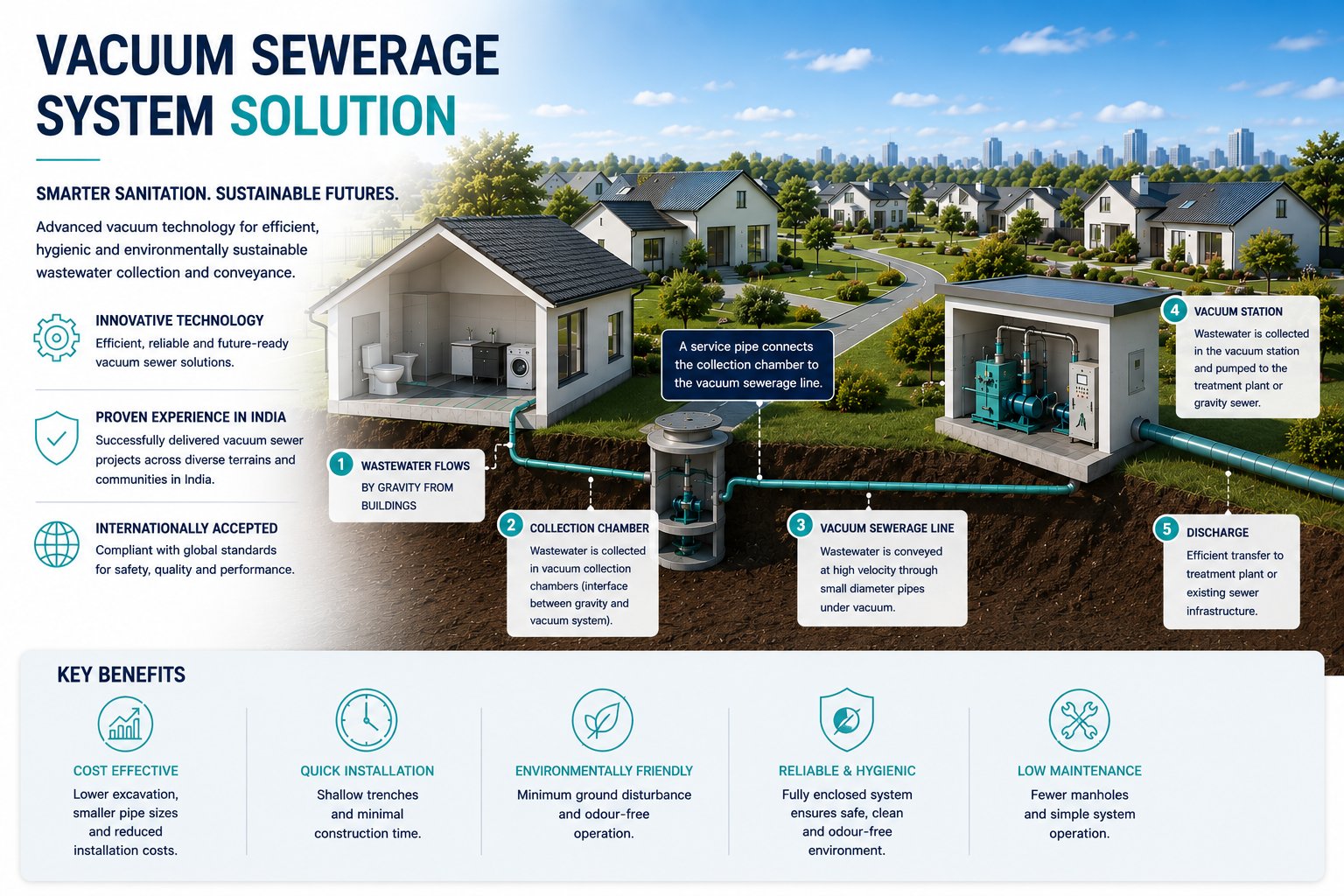
Vacuum Sewerage — Engineering Design & Management
Anvaya holds rare, specialised expertise in the design, project management, and commissioning of Vacuum Sewerage Systems — an advanced, trenchless sanitation solution ideal for densely populated areas and challenging terrains. Our team brings together process engineering, network design, and on-site project management under one integrated roof.
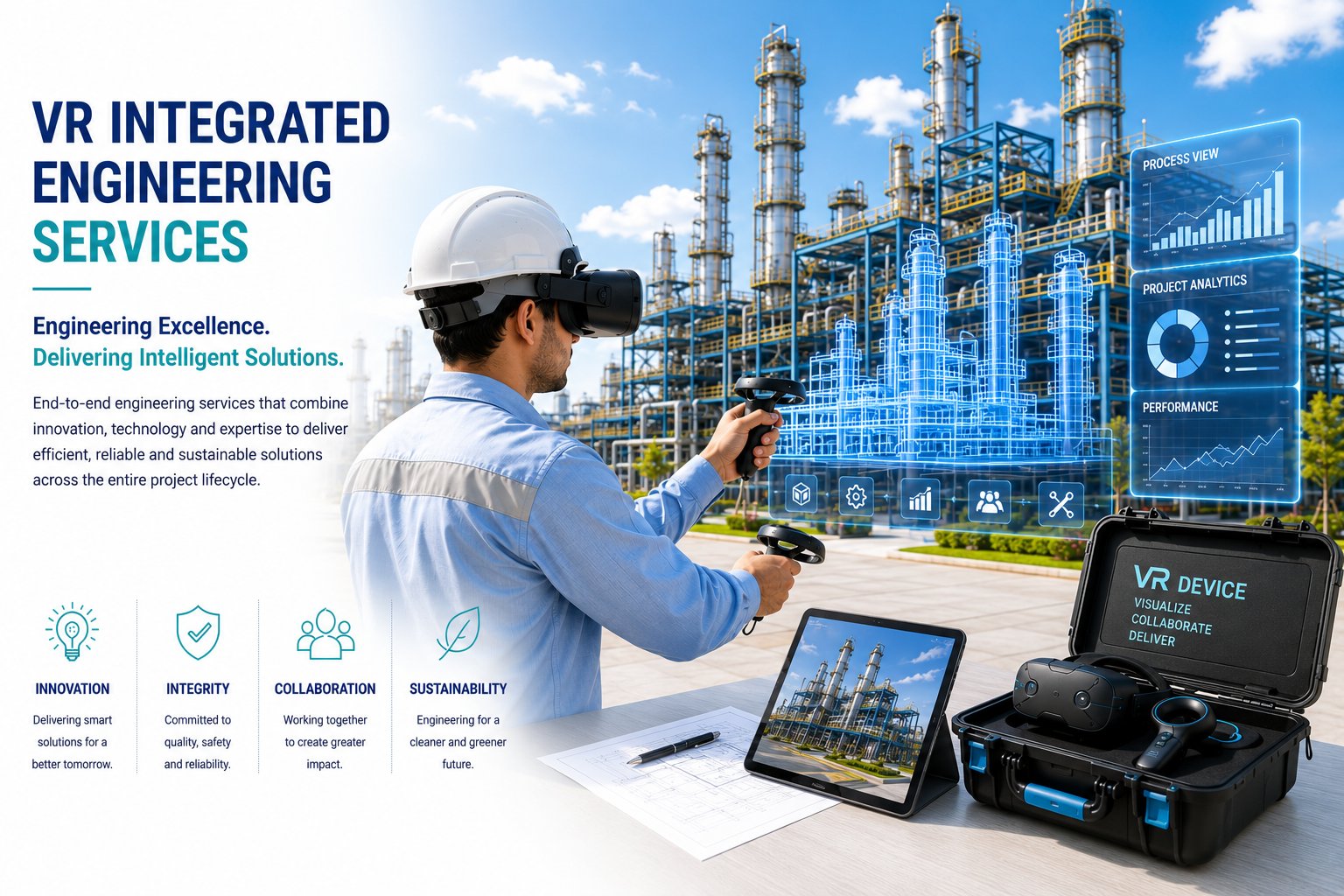
VR Integrated Engineering Services
We develop Virtual Reality-ready project models that seamlessly integrate engineering design with immersive 3D visualisation — enabling project engineers, managers, and clients to experience, review, and optimise construction sequences before a single brick is laid. Our VR platform bridges the gap between design intent and site execution, reducing rework and elevating stakeholder communication.
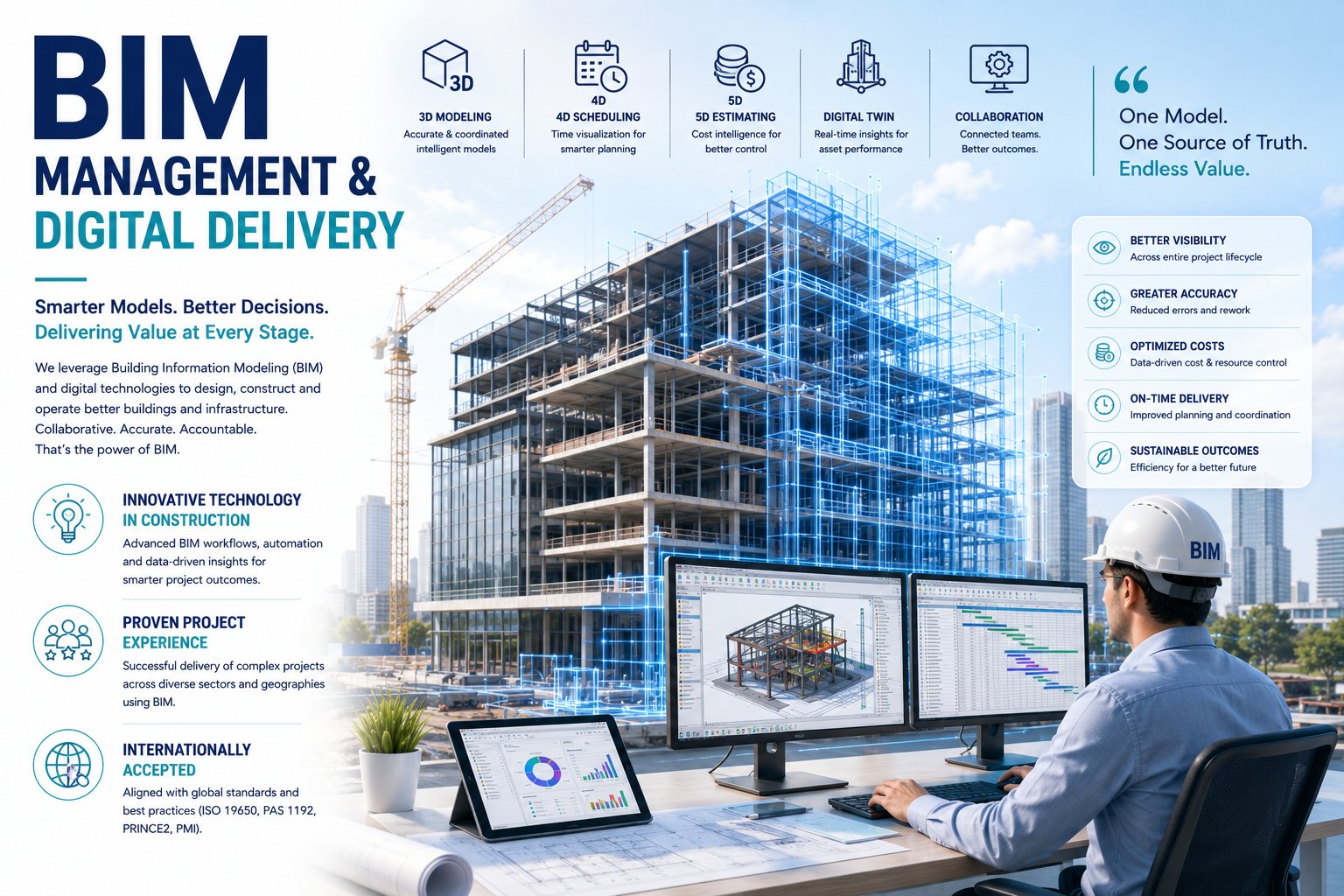
BIM — Building Information Modelling & Digital Delivery
We leverage Building Information Modelling and digital technologies to design, construct, and operate better buildings and infrastructure. Our BIM capabilities extend across 3D modelling, 4D scheduling, 5D estimating, and Digital Twin development — transforming complex projects into intelligent, data-rich digital assets. Collaborative. Accurate. Accountable. That's the power of BIM.